Even though this post is too late for Dr. Seuss Day (March 2nd) I wanted to put it out there what my take on the best Dr. Seuss books are! That might seem strange considering I don’t write children’s books (yet) but I find them to be some of the most important books that exist! Learning to read and actively reading promotes a better word, more intelligence and personal betterment. We all have to start somewhere and for many of us, Dr. Seuss were among the first wave of books we were exposed to that we not only had read to us but read ourselves. So without further adieu, here are my Top 5 Picks for Best Dr. Seuss books…
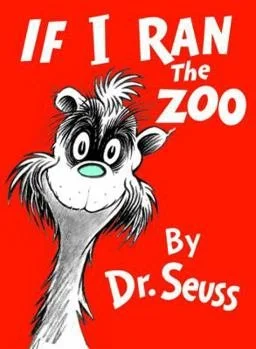
Honorable Mention: If I Ran the Zoo
While I can’t list this above such heavy hitters as Horton Hears a Who! or Hop on Pop, it would be a disservice to not mention this controversial book.
In the late 2010s and early 2020s, an uproar came out of nowhere about this 1950 release from the good doctor. There were calls to ban the book and in extreme cases, ALL of Dr. Seuss’s other books. This was due to the interpretation that it was filled with racist tropes. The irony being that few of the complaintants had aby connection to the perceived targets. I distinctly remember discussing this at my job with coworkers. When one came up and asked if we'd heard about the calls to cancel, we asked, “what book?” When she replied, “If I Ran the Zoo,” my boss (who was black by the way) jokingly stated. “I’d put ALL the monkeys in the zoo!”
While I won’t spend time discussing the specific illustrations that offended people, it goes without saying that I don’t agree with full on banning books. Was this book a product of its time? Sure. Are their racist depictions within it? Yeah, actually, there kinda is. Was it made with ill intentions towards the alleged targets or the reading audience? Absolutely not.
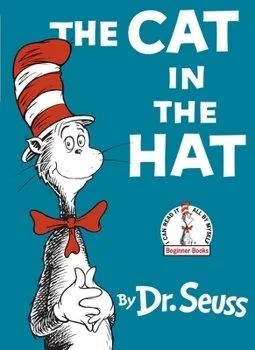
Number 5. The Cat in the Hat
Though not my favorite in the collection, It would be absurd for me to not include this book. Not only is it the most well known, it’s become a symbol of the Seuss Empire on its own. That tall hat can be found on every corner of the globe.
This books very existence was to serve the point in my introduction of this article. Seuss specifically wanted a book that would be a great primer for young readers. He stated later in life that he was glad the book helped to eliminate the Dick And Jane, beginner early books.
Marylin Manson has cited this book as one of his favorites (right beside the Holy Bible). So it is as pervasive in Pop Culture as can be. Let’s just hope that one day a live action film adaptation is made that is better than that god awful Mike Myers version.
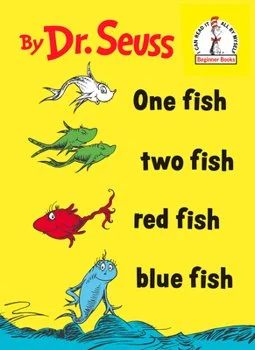
Number 4. One Fish, Two Fish, Red Red Fish Blue Fish
My inclusion of this book on the list is very simple. Because it’s memorable!
You’d be hard pressed to find someone in the English speaking western world that doesn’t reference the title to this book on occasion. Of all his works, this one might be the rhymiest. You simply flip through the book, look at the fun pictures and rhyme your way through fundamental numbers and vocabulary.
I don’t have much else to say about this book except that it’s probably one of the first 5 books (Seuss or otherwise) that you should be introducing to your children.
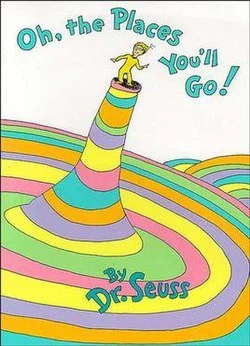
Number 3. Oh, the Places You’ll Go!
This entry is special for a number of reasons.
For one, it was the last book Seuss published within his lifetime. Several have been released post-mortem, but before his death in 1991, he released this a year earlier in 1990. I was 2 years old!
But more importantly, this book is making the presumption to the reader that they will leave home some day and experience things they never thought possible. By doing so, Seuss is sparking the very notion that they in fact will do that. Thus having them walk away from the book eager to see what all there is to experience.
As someone who not only loves learning, if you know me, then you know I also love travel. But even if one does not travel far in their lifetime, there are other ways to go far beyond the world that is presented to you when you’re young and seeing things for the first time. Dr. Seuss wrote this book with the hindsight of all his years and accomplishments behind him. So you know that its meaning comes from the heart.
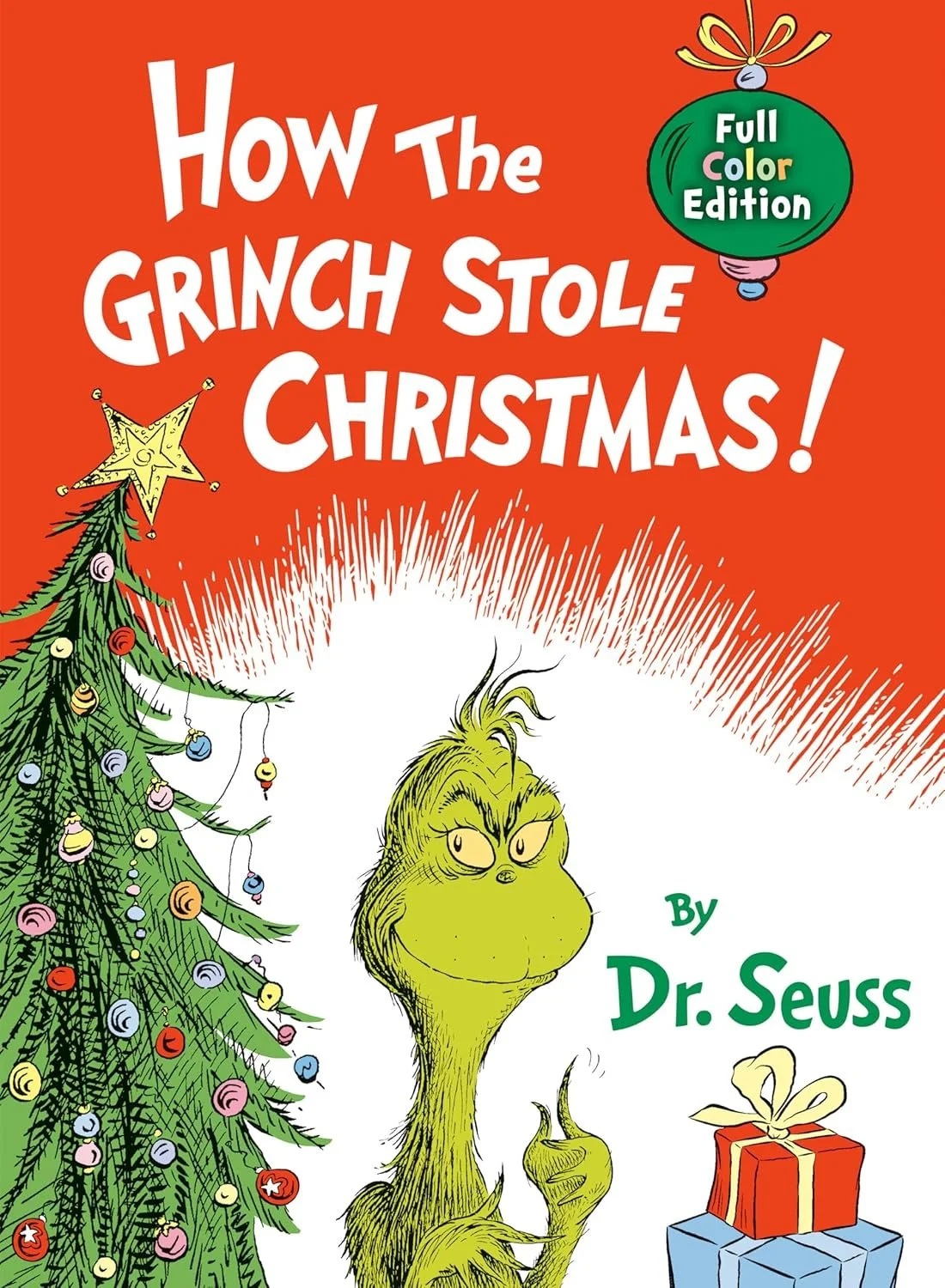
Number 2. How The Grinch Stole Christmas!
I will say right now that it was very difficult to not place this book at #1. It certainly has the notoriety and the clout to be there. It’s probably second only to The Cat in the Hat, in terms of how well it is known. But for me, this book evokes memories of watching the animated television special from 1966, narrated by Boris Karloff of all people!
Even the 2000 live action Jim Carrey movie carries as a strong adaption. And the 2018 animated feature as well! That’s because the imagery and the message of this story are timeless and sincere.
At its core, The Grinch is not a villain, but the epitome of a misunderstood person who is shunned. One could almost say he goes against the saying, “You either die a hero or live long enough to become a villain.” In his case, if not for Cindy Lou Who, The Grinch would have died a villain, but he lived long enough to be the hero!
One thing I don’t see mentioned often enough is the fact that The Grinch really did nothing wrong prior to his circumstance. He was treated like crap for absolutely no reason and was well within his right to stick it to Whoville. No amount of Who Hash could atone for what they did to him. Alas, because of his encounter with Cindy Lou, who had absolutely nothing to do with his shunning, The Grinch got past all this. He forgives and forgets. And the other Whos welcome him in when they see he’s not bad at all. In that regard, Cindy Lou had an equal effect on them as well.
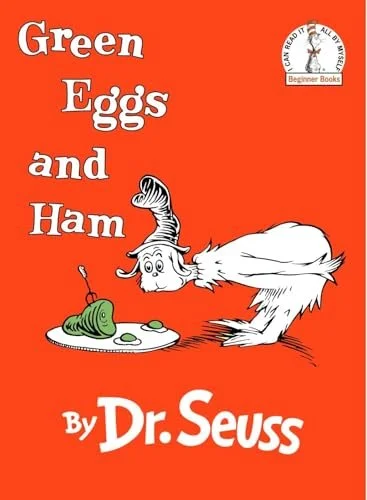
Number 1. Green Eggs and Ham
Ah, really, there could only have ever been one book that could’ve topped this list for me.
Green Eggs and Ham is not unlike, Oh, the Places You’ll Go!, in regards to encourage the reader to venture out. Except in this case, the protagonist (Sam-I-Am) is trying to convince someone who is adversarial to the notion. The unnamed character (often called Guy-Am-I) seems to be hell bent on not trying something he perceives to have disgust for. He swears up and down that he does not like Green Eggs and Ham, no matter what they’re paired with. Not on a boat or with a goat. Not with a fox or wearing sox.
But the underlining message here is that this character is avoiding Green Eggs and Ham to his own detriment, simply because he thinks he doesn’t like them. When in reality, they are his favorite. He just hadn’t had them yet. So how do you know what you like and don’t like? So try stuff out!
Another reason this book is cemented at the top for me is the fact that it was created by a bet Seuss’s Editor made to him. He wagered $50 (a lot in 1960!) that Seuss couldn’t write a book of any substance that only had 50 words or less. Not only was this clearly an example that he could, but it has become the Gold Standard for the Beginning Level of the Lexile Scale, which determines what comprehension level a reader has. In my own personal writing journey, the use of this scale was used on a paper I had written in college that showed I was reading/writing at Junior in College level. Except this was English 101 at a Community College, I hadn’t taken an English course in 6 years, it was the first paper of the semester and I hadn’t even proofread it before turning it in. The instructor gave me a 97.5% (due to some punctuation errors) and told me I should consider being a writer.
